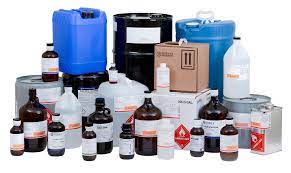
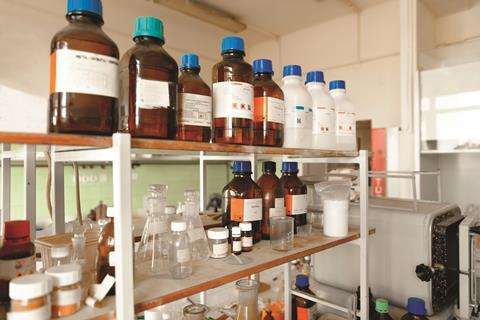
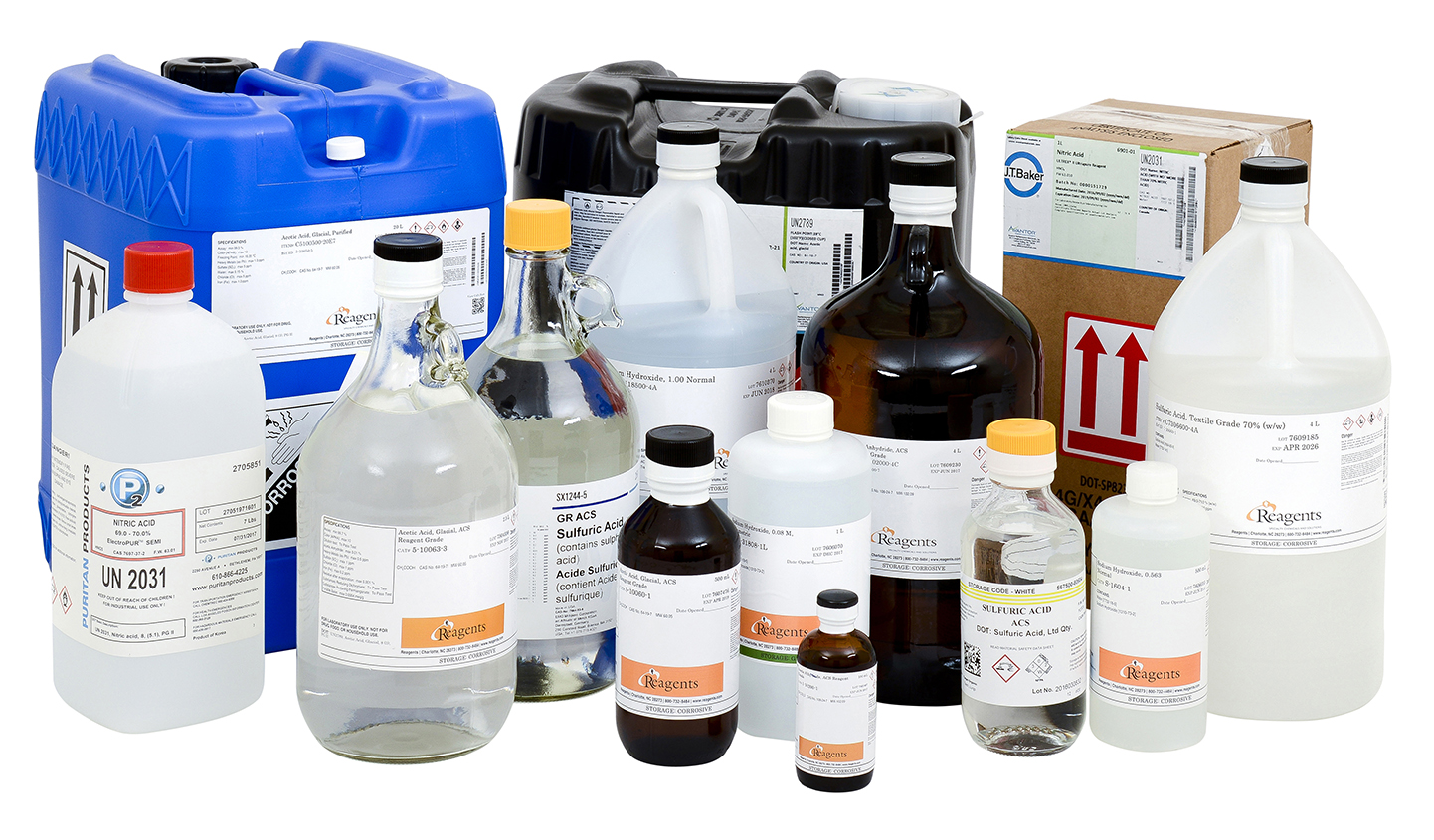
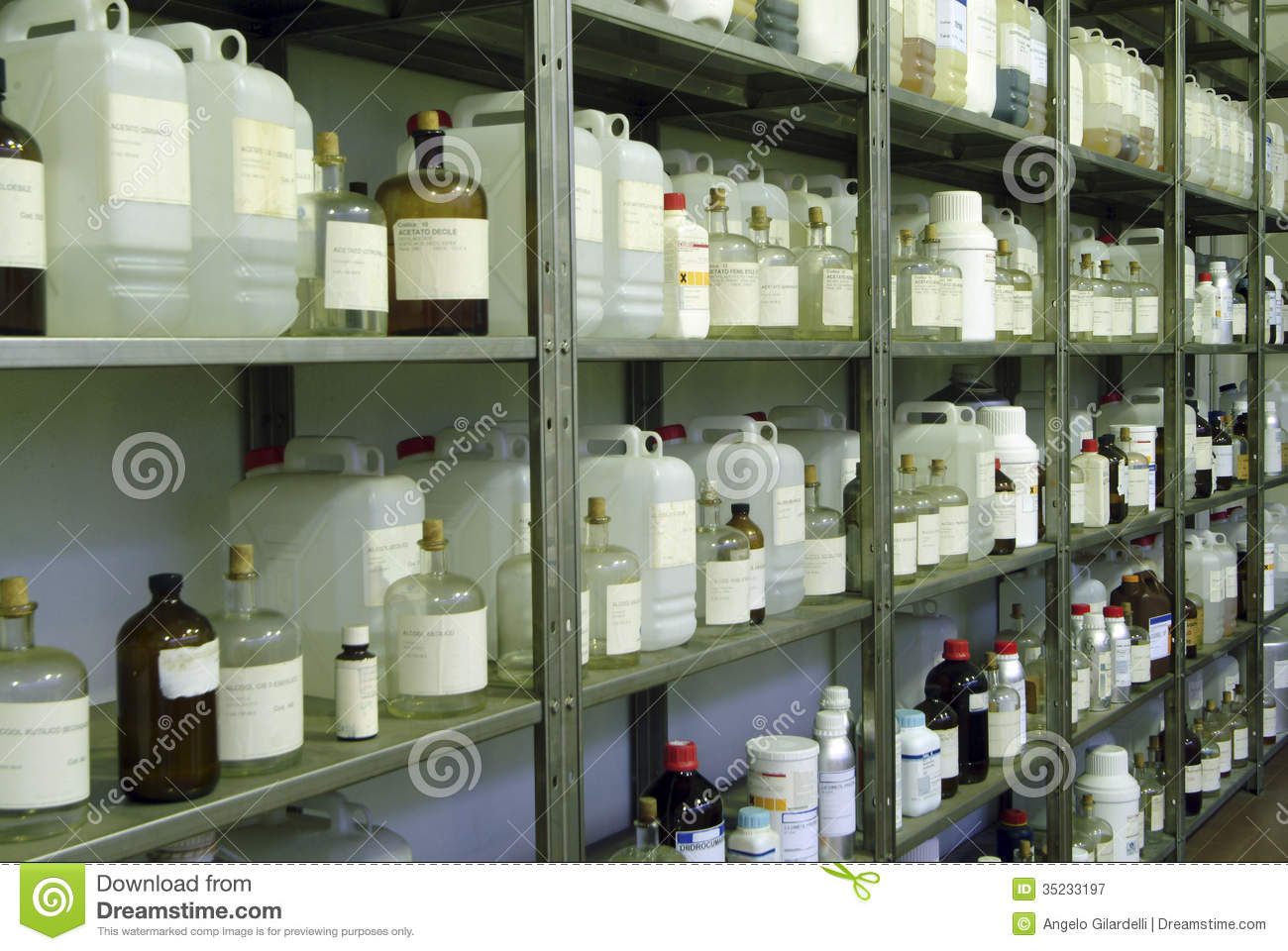
The following general suggestions for safe storage of chemicals in the laboratory should be implemented.
- The quantities of chemicals that are stored within a laboratory should be minimized, as specified by NFPA 45 and OSHA.
- Bulk quantities of chemicals (i.e., larger than one gallon) must be stored in a separate storage area. Transfer of flammable liquid from five gallon or larger metal containers may not be done in the laboratory.
- Chemicals should be stored in accordance with the manufacturer’s recommended temperature and humidity level. Chemicals should not be stored near heat sources, such as steam pipes or laboratory ovens. Chemicals should never be stored in direct sunlight.
- Chemicals should be dated when received and when opened. Time-sensitive chemicals should also include an expiration date.
- Visual inspection of the material and its container should be conducted routinely. Indications for disposal include:
- Cloudiness in liquids
- Material changing color
- Evidence of liquids in solids or solids in liquids
- “Puddling” of material around outside of container or pressure build-up within bottle
- Obvious deterioration of container
- Chemicals should not be routinely stored on the benchtops. In such locations they are unprotected from exposure and participation in a fire situation and are also more readily knocked over. Each chemical should have a specific storage area and be returned there after use.
- Large quantities of flammable materials should not be stored in the laboratory. Only the amounts needed should be kept on benchtops, the remainder should be kept in flammable storage cabinets.
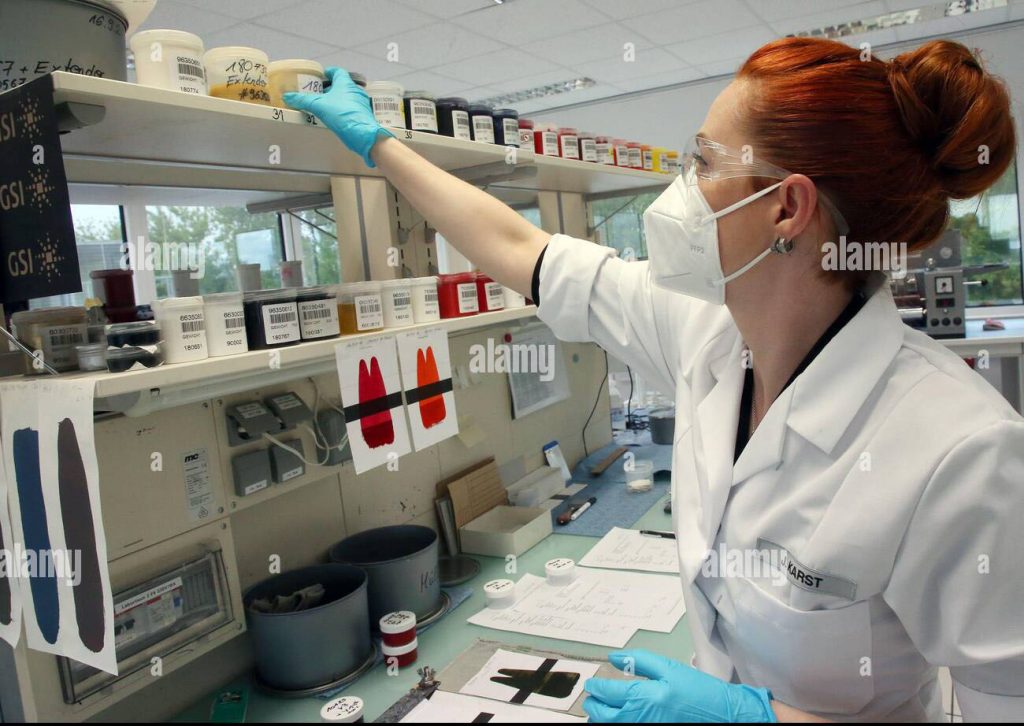
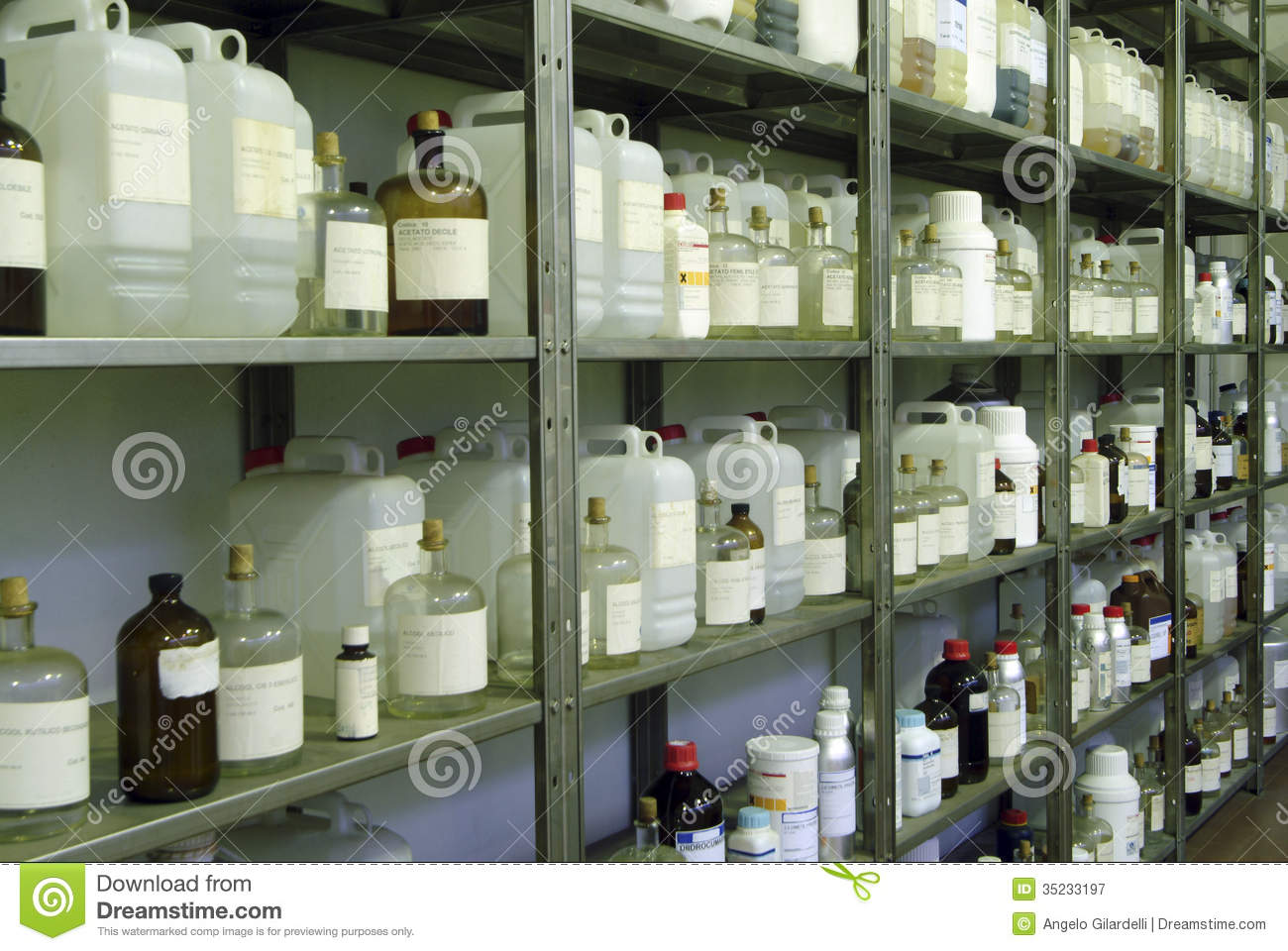
- Laboratory shelves should have a raised lip along the outer edge to prevent containers from falling. Never allow chemical containers to extend over the edge of the shelf. Liquid or corrosive chemicals should never be stored on shelves above eye-level. Glass containers should not touch each other on the shelves.
- Secondary containers or trays should be used for chemical storage whenever possible to minimize the flow of material should a spill or rupture occur. Round bottom flasks should always be supported properly in cork rings or by other means to keep them from tipping.
- Adequate security must be provided so that unauthorized personnel do not have access to hazardous materials.
- Chemicals may not be stored on the floor for any amount of time.
- Chemicals no longer needed for research purposes may be offered to other labs on the same campus or must be disposed of in accordance with campus regulations.
- Flammable materials must never be stored in domestic-type refrigerators. Only explosion-proof or flammable material refrigerators should be used for storage of these chemicals within a laboratory environment.
- Refrigerated chemicals must be tightly capped to reduce vapors and alleviate odors. Flasks stoppered with cork, rubber, or glass should be wrapped with Parafilm to reduce leakage.
- Inventory the materials in refrigerators frequently to avoid overcrowding with materials that have long since been forgotten. Also make it a point to defrost refrigerators occasionally so that chemicals do not become trapped in unique ice formations!
- Before storing materials in a refrigerator, ensure that refrigeration is necessary. Never store peroxide formers in a refrigerator.
- Fume hoods should not be used as general storage areas for chemicals. This may seriously impair the ventilating capacity of the hood.
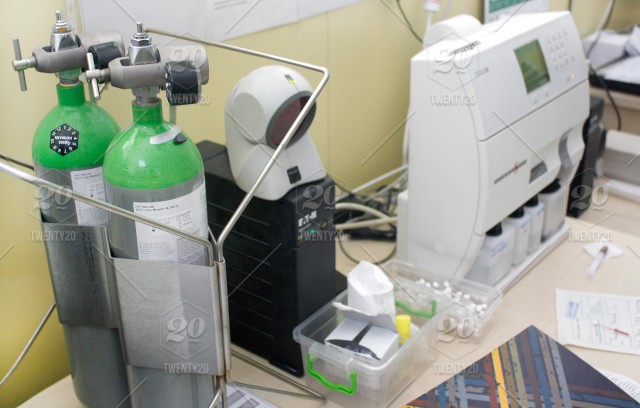
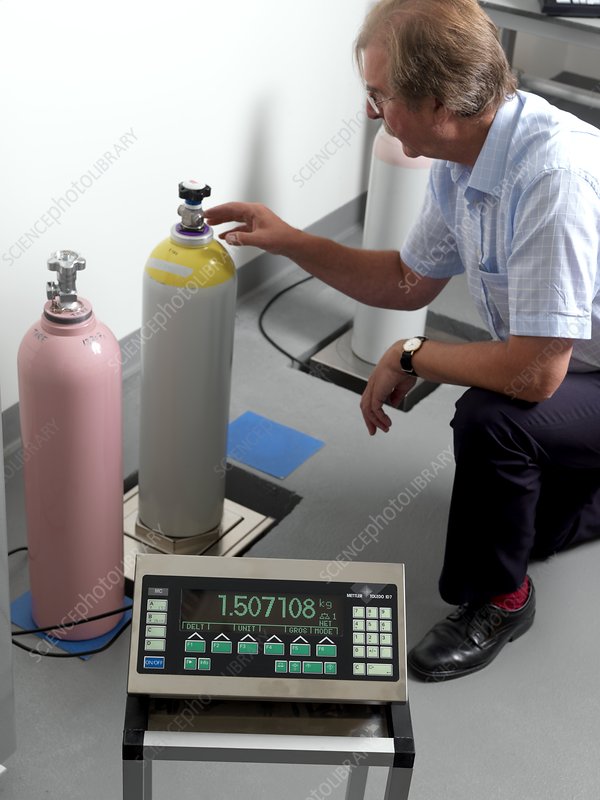
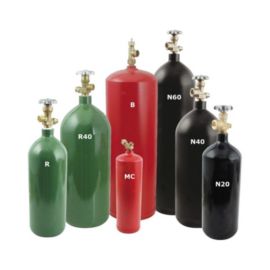
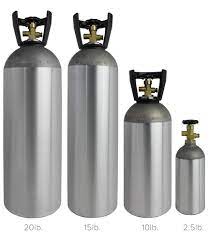
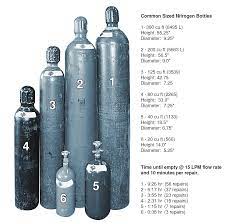
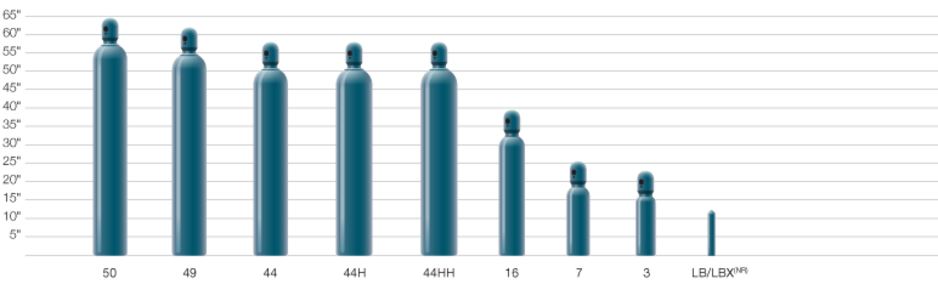
- Gas cylinders must be securely strapped to a permanent structure (wall, lab bench, etc.). When they are not in use they should be capped.
A mixed storage with other goods shall be avoided, a free space to other goods .